Local SEO best practices center on optimizing Google Business Profile as the primary ranking entity, maintaining NAP consistency across directories, earning high-quality local reviews, strengthening on-page local signals, publishing location-specific pages for multiple location businesses, building authoritative local citations and backlinks, and supporting visibility with mobile-optimized pages, local keywords, and LocalBusiness schema markup. Read more detailed guide on local SEO here.
Nearly 46% of Google searches carry local intent, yet most small businesses never appear in Google’s Map Pack, where the majority of local clicks happen. Map Pack visibility determines which businesses receive calls, direction requests, and walk-in traffic, not brand awareness or domain authority.
When Google Business Profile data is incomplete, NAP signals conflict across directories, or reviews lack volume and freshness, Google reduces trust in the business entity and suppresses map visibility. For small businesses competing in the same service area, local SEO failures don’t reduce traffic; they redirect customers directly to competitors.
7 Proven Local SEO Best Practices and Tips
Google ranks local businesses in the Map Pack by evaluating entity accuracy, geographic relevance, and real-world trust signals. The following practices focus on the exact inputs Google uses to validate a business entity and decide whether it deserves visibility in map-based search results.
1. Google Business Profile Optimization
Google Business Profile is the main source Google uses to rank businesses in the Map Pack. Google reads profile categories, services, service areas, and reviews to decide which businesses match a local search. An incomplete or outdated profile reduces Google’s trust, even when the website is optimized.
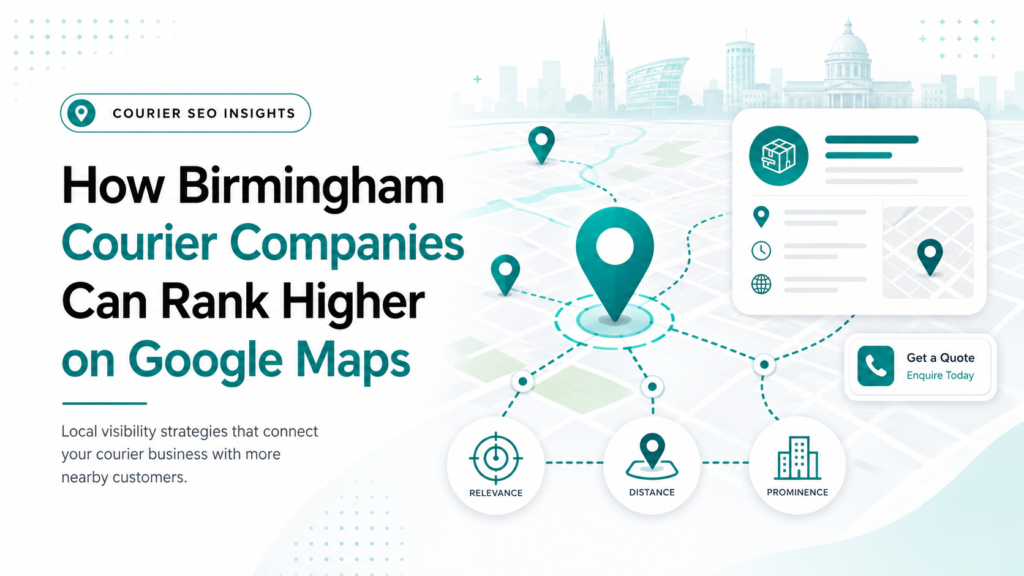
Google’s local ranking systems rely on Google Business Profile data to evaluate relevance, proximity, and prominence before deciding which businesses appear in Map Pack results.
Strong optimization starts with choosing a primary category that matches what customers search for. Secondary categories expand service coverage without confusing Google. Business descriptions should list real services and locations using plain language. Photos, videos, and active review responses confirm that the business operates at a real location and serves real customers, which increases Map Pack visibility.
2. Advanced Local Keyword Research and Landing Pages
Local keyword research helps Google connect a business to location-based searches. Google looks for clear links between services, locations, and page content when ranking Map Pack results. Generic keywords without location signals weaken relevance for local queries.
Effective local keyword research focuses on service and location combinations, such as city names, neighborhoods, and service areas. These keywords should appear naturally in page titles, headings, and body content. Each core service or location should have its own landing page that clearly explains what the business offers and where it operates.
Landing pages perform best when they describe real services, real locations, and real customer needs. Pages written only to insert keywords fail to build relevance or trust.
PRO TIP:
One strong location page often performs better than multiple thin pages targeting nearby cities. Add strong local signals targeting near by most loved popular places.
3. NAP Consistency and Local Entity Validation
NAP stands for Name, Address, and Phone number. Google uses NAP data to confirm that a business is real and located where it claims to operate. When NAP details change across websites, directories, or maps, Google receives mixed signals and lowers confidence in the business entity.
Consistent NAP information across Google Business Profile, the website, and local directories helps Google match all mentions to one business. The business name should stay the same everywhere. The address format should not change. The phone number should match exactly. Accurate NAP data strengthens entity validation and improves eligibility for Map Pack rankings.
4. Online Reviews and Local Trust Signals
Online reviews act as public trust signals for both users and Google. Google reads review quantity, review frequency, and review sentiment(positive or negative) to decide which businesses deserve higher visibility in local results. A business with recent and consistent reviews appears more active and reliable than one with old or limited feedback.
Small businesses should request reviews after completed services, not in bulk or at random. Responding to reviews shows ongoing customer engagement and improves trust signals tied to the business profile.
PRO TIP:
Businesses that earn steady reviews each month tend to perform better in the Map Pack than businesses that receive reviews in short bursts.
5. Location-Specific Content and Local Relevance
Google uses website content to understand where a business operates and which services it provides in each location. Pages that mention cities, neighborhoods, and service areas help Google connect the business to local search queries.
Each location page should describe services, service areas, and nearby landmarks in clear language. Content should match real service coverage, not copied text reused across locations.
6. Local Citations and Backlinks
Local citations are online mentions of a business name, address, and phone number on directories, maps, and local websites. Google uses citations to confirm business details and measure local prominence. Citations from trusted and relevant sources carry more weight than large volumes of low-quality listings.
Local backlinks strengthen authority by showing real connections within the community. Links from local news sites, chambers of commerce, and industry associations help Google associate the business with a specific geographic area.
PRO TIP:
A small number of accurate citations from trusted local sources often outperform hundreds of generic directory listings.
7. Mobile Optimization and Local User Experience
Most local searches happen on mobile devices, especially when users look for nearby services. Google evaluates mobile usability, page speed, and interaction signals to decide which businesses appear in mobile-based Map Pack results. A slow or difficult mobile experience reduces engagement and lowers local visibility.
Websites should load quickly, display clearly on small screens, and make actions easy. Click-to-call buttons, directions, and short forms help users act without friction.
PRO TIP:
Pages that load in under three seconds tend to keep local users longer, which supports stronger engagement signals.
Optimizing for AI, Voice Search, and Augmented Reality
Google uses AI within its local ranking systems to reorder Map Pack results based on relevance, proximity, and real user engagement. As personalization increases, businesses with clear Google Business Profile data, accurate service coverage, and consistent local signals surface more often than businesses relying on broad visibility.
Voice search reinforces this behavior. Queries such as “phone repair near me” or “open now” depend on structured profile data, service attributes, and clear location relevance. Businesses that answer common customer questions and maintain updated hours align better with voice-driven local searches.
Augmented reality tools like Google Lens and Maps rely on visual confirmation. Fresh photos, correct locations, and active profiles help Google validate physical presence and connect visual searches to real businesses in Map Pack results.
Case Study: Local Mobile Repair Shop in Leadenhall Market, London
One of the client of Insight Crafts Marketing, a local mobile repair shop operating in Leadenhall Market, central London, struggled to generate calls from Google despite having strong impressions. A previous SEO approach focused on “hyperlocal SEO,” but the execution created multiple pages targeting the same services and keywords. These pages overlapped heavily, caused keyword cannibalization, and confused both users and Google.
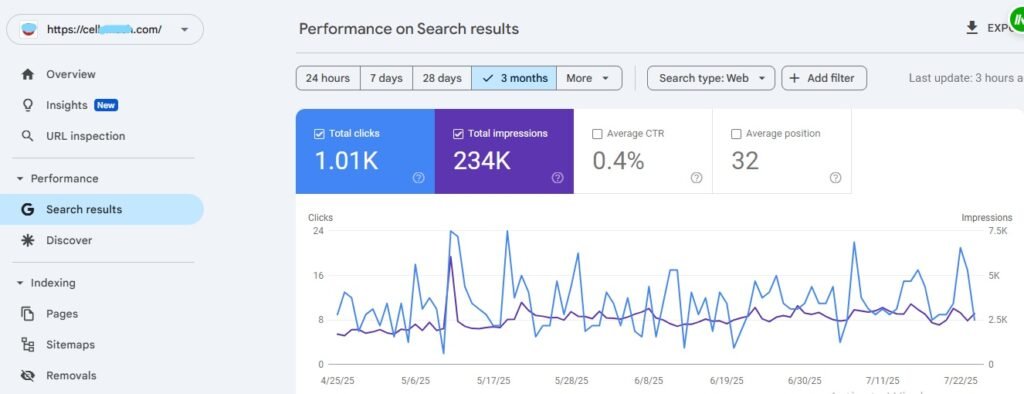
The website showed impressions, but clicks stayed low. Google displayed the business for broad and irrelevant searches, not for users looking for immediate phone repair services nearby. Google Business Profile posts also lacked search intent. They read like social media updates instead of content aligned with how users search on Google.
The solution required cleanup, not expansion.
Duplicate and overlapping pages were removed and merged into a single, focused service page. Removing overlapping pages reduced entity confusion and allowed Google’s local ranking systems to associate the business with a clear service area and high-intent queries.
Keyword targeting was narrowed to users within a 5-mile radius around Leadenhall Market, where most customers actually come from. Google Business Profile was fully optimized with accurate services, photos, updates, and a structured review process
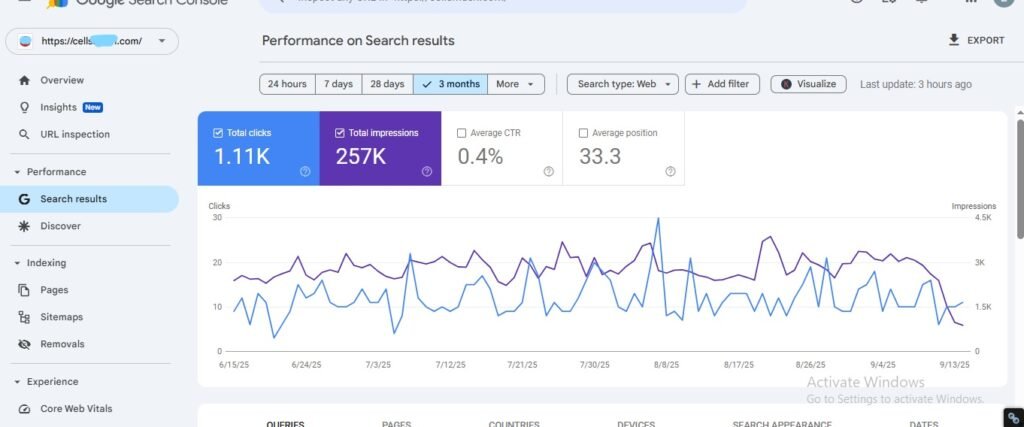
At first, impressions dropped. That drop confirmed the fix. The business stopped showing for irrelevant searches and started appearing for users ready to act.
Results
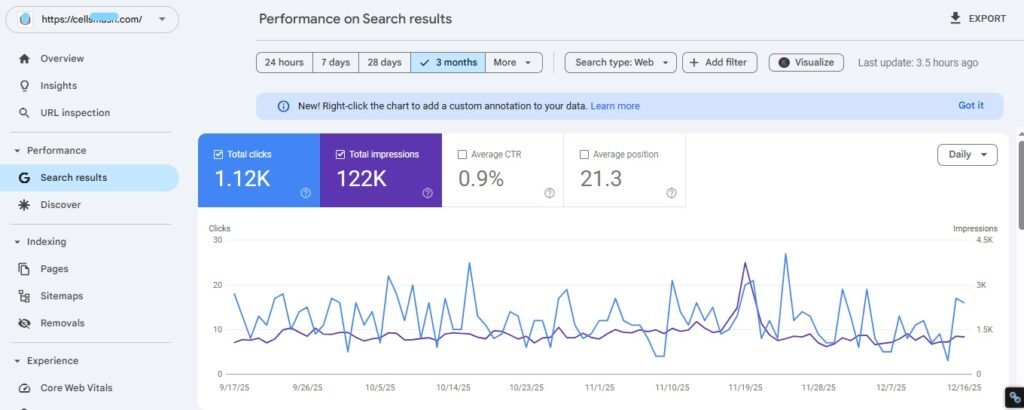
Clicks increased while impressions stabilized around the correct audience and CTR Improved to 0.9.
- Google Business Profile went from zero calls to 60 calls in the first month
- Calls came from real users asking about repairs, directions, and bookings
- Continued growth over the next two months as trust and relevance improved.
This case shows that local SEO works best when it targets the right audience, not the largest audience. Fewer pages, clear intent, and accurate location signals produced better results than excessive hyperlocal content.
Conclusion: 7 Proven Local SEO Practices to Help Small Businesses Rank in Google’s Map Pack
Ranking in Google’s Map Pack is not about publishing more pages or chasing broad visibility. It depends on how clearly Google understands, trusts, and validates a local business entity. Google Business Profile accuracy, focused local landing pages, consistent NAP data, reviews, citations, mobile usability, and user intent alignment determine which businesses receive calls and visits.
The Leadenhall Market case study proves that fewer, stronger signals outperform excessive hyperlocal content. When local SEO targets the right audience within the right radius, impressions may drop, but clicks, calls, and real customers increase. Small businesses that track performance, remove noise, and align with how people actually search will continue to win visibility as local search evolves.