Most pages fail to rank not because they lack content, but because search engines fail to interpret them correctly. Search systems need clarity. They need structure. They need signals. On-page SEO gives them all three.
On page SEO is the practice of refining a webpage so it clearly communicates its topic, intent, and structure to search engines and AI systems. It doesn’t just support rankings; it creates the conditions where rankings are possible. When done well, it helps Google rank the page higher. It helps AI assistants understand the content. And it helps real users find exactly what they came for.
What Is On Page SEO?
On-page SEO is the process of optimizing a single webpage’s content, structure, and metadata so search engines and AI systems can clearly understand its topic, purpose, and usefulness. It helps improve rankings, visibility, and trust by aligning the page with search intent and topic relevance.
It includes everything that exists on the page itself: the content, the headings, the title tag, the internal links, the URL, and even how fast the page loads. On-page SEO tells systems what the page is about, who it helps, and why it deserves visibility.
In 2026, on-page SEO is no longer about keywords alone. It’s about clarity, structure, topical relevance and semantic depth. Search engines and AI models evaluate how well a page explains a topic, how clearly sections are organized, and how easily specific answers can be extracted.
When on-page SEO works, three outcomes follow:
- Search engines match the page to the right queries
- AI systems reuse the page as a trusted source
- Users stay longer because the content is instantly clear
Why On-Page SEO Still Matters in 2026
In 2026, algorithms analyze structure, assess clarity, and extract answers. On-page SEO gives you full control over how your page is understood.
Off-page SEO depends on external factors. On-page SEO is in your hands. You decide how content is structured, how headings guide readers, how internal links support context, and how fast the page loads.
Every element you optimize improves how your page matches search intent, ranks in results, and earns AI citations.
Foundations of On-Page SEO
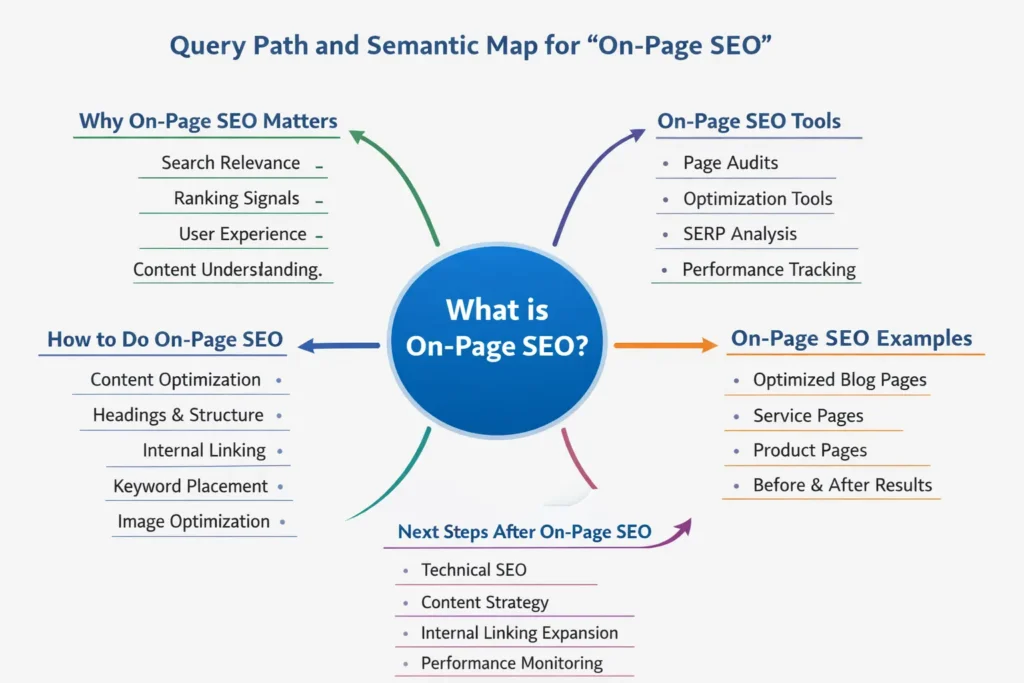
On-page SEO begins before a single word hits the page. To rank in search and get cited in AI Overviews, your page needs strong fundamentals built on how users search, how algorithms parse queries and content, and how relevance is determined.
Here are the four foundations that guide effective on-page SEO in 2026:
1. Keyword Research (Primary + Semantic)
Pick a clear primary keyword (the exact query your page answers). You can use tools like SEMrush, Ahref and Keyword Everywhere to determine the best keywords with highest searches. Then build a semantic set: close variations, related terms, and subtopics users and crawlers associate with your main keyword.
This supports topical depth and improves keyword visibility across AI and search.
Example:
- Primary: on-page SEO
- Semantic Field: SEO content structure, optimize a page, internal links, metadata, HTML tags
These aren’t filler terms, these help search engines understand scope, and help LLMs map concepts to your page.
2. Query Path Mapping
Most users don’t stop at one question. They follow a trail:
Definition → Importance → Process → Tips → Tools → Examples → Action
This is the query path, the natural sequence of questions users expect to be answered as they scroll.
It’s also the structure AI systems look for when deciding what content to cite or reuse.
When your content follows this path cleanly, no bloated intros, no keyword dumping, it does three things:
- Keeps readers engaged longer
- Improves semantic coverage
- Increases chances of being quoted in AI responses
You don’t need to spell out each stage. But you do need to anticipate the next question and deliver it before the user or model asks for it. That’s how modern content earns visibility.
Your job is to anticipate that path and structure content around it.
3. Entities & Attributes
Search and AI engines process content as data.
Search engines recognize entities (real-world topics, things, or concepts), attributes (their traits or properties) and analyze how pages describe them. Cover both.
Example:
- Entity: On-page SEO
- Attributes: title tag, page speed, H1 tags, E-E-A-T, mobile usability
Don’t just mention these. Explain them, show how they work, and connect them clearly to your topic. That’s how you build topical authority.
4. Search Intent Alignment
Keywords carry intent. Some seek information. Others want comparisons or products and some want to to buy.
Your job is to match it. Misalignment kills rankings.
If someone searches “how to optimize a blog post for SEO”. Give them a guide, not a service page.
If they search “best on-page SEO tools”, show them a ranked list, not definitions.
This alignment is what helps your page rank and get selected as an AI answer.
Core Elements of On-Page SEO
On-page SEO is built on four key areas: content clarity, page structure, metadata signals, and user experience. Each one shapes how your page is ranked, cited, and understood.
1. Content & Topical Coverage
To rank in 2026, your content must serve both users and machines. That means building clear, complete, and well-structured topical coverage that search engines and AI models can interpret without confusion.
At the core, your page should:
- Target a primary query that exactly matches the user’s goal
- Cover semantic variations and related entities that define the topic’s full scope
- Follow a natural query path, answering not just “what,” but also “why,” “how,” “with what,” and “what next.”
- Use proper sentence structure (Subject–Verb–Object) to ensure machines can extract facts cleanly
Google’s “Information extraction from a document” (US20060212395A1) explains how structured sentence patterns help identify entities and relationships within a page.
Instead of vague statements, write clear ones like: “Title tags improve page clarity,” or “Fast-loading pages reduce bounce rate.” Search engines use this structure to extract facts and match them to search or AI prompts
Avoid keyword stuffing or robotic phrasing. Focus on natural phrasing, short sentences, and entity-first writing.
2. Heading & Structural Elements
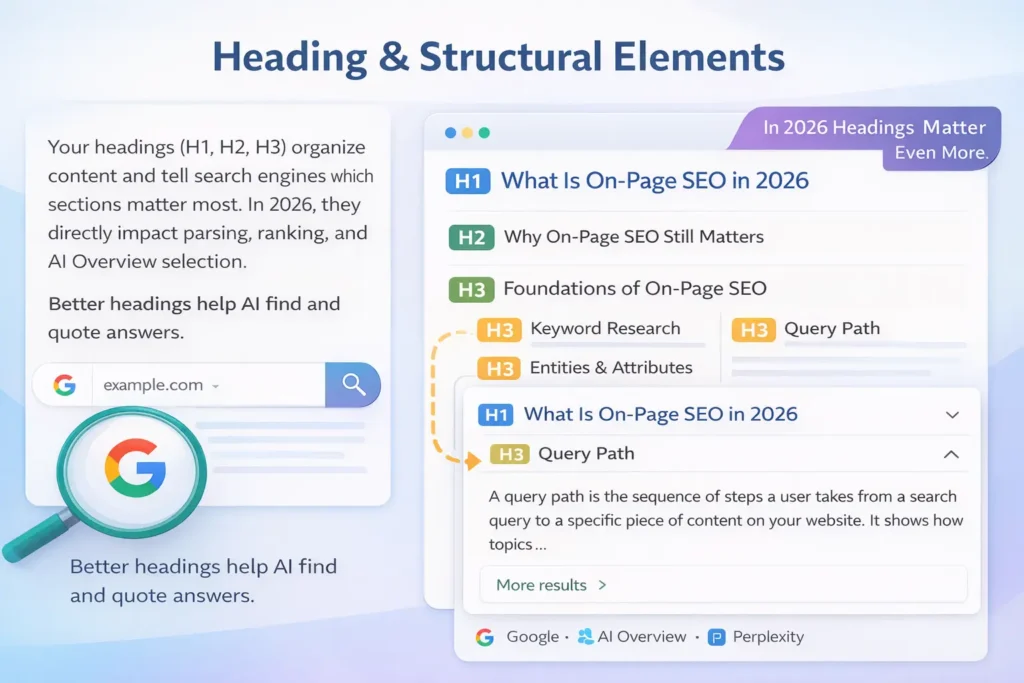
Headings are not just visual breaks, they are semantic markers that tell both users and machines how your content is organized. In 2026, heading structure directly impacts how a page is parsed and ranked.
Your page should have one clear H1 that includes the core topic or keyword. This is your main subject that tells crawlers what the entire page is about. Every section that follows should then be grouped logically under H2s, with supporting details under H3s if needed. This hierarchy helps machines understand the page structure and extract relevant passages or answers.
For example:
- H1: What Is On-Page SEO in 2026
- H2: Why On-Page SEO Still Matters
- H2: Foundations of On-Page SEO
- H3: Keyword Research
- H3: Query Path
- H3: Entities and Attributes
AI systems like Google and Perplexity scan your headings to find clear sections. If one part answers a question well, they can rank or quote that section even if the full page doesn’t rank.
Headings should not be stuffed with keywords or always written as questions unless it fits naturally. Instead, aim for clarity. Use descriptive headings that reflect the content underneath them. If a user skims your page by headings alone, they should understand what it covers.
Also, keep each section focused and scannable. Large blocks of text buried under weak headings confuse users and crawlers alike.
3. Title Tag Optimization (Create Clickable Titles)
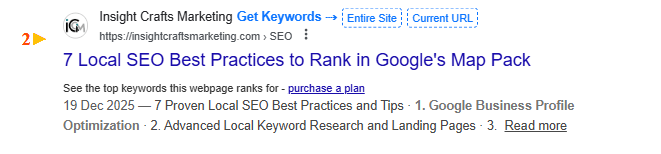
Your title tag is the first thing users and AI see in search results. It shapes clicks, relevance, and visibility. In 2026, it also plays a role in AI citation, especially when LLMs like ChatGPT or Gemini scan the SERPs for clear, useful sources.
What Makes a Good Title Tag?
- Matches search intent: Make it obvious your page answers the query.
- Uses the target keyword naturally: Avoid stuffing or awkward phrasing.
- Boosts clickability: Use numbers, emotional triggers, or clarity gaps.
- Stays under 70 characters: Prevents truncation in SERPs.
- Includes freshness, if needed: Add the year for time-sensitive content.
Example Breakdown:
Bad: SEO Tips for Blogs
Good: 10 Easy SEO Tips to Optimize Your Blog (2026 Guide)
- “10 Easy” adds clarity and accessibility
- “Optimize Your Blog” matches the query intent
- “2026 Guide” signals freshness and value
Google’s ranking based on document information highlights how metadata like title tags help assess a page’s topical relevance before crawling its content.
4. Meta Description Optimization
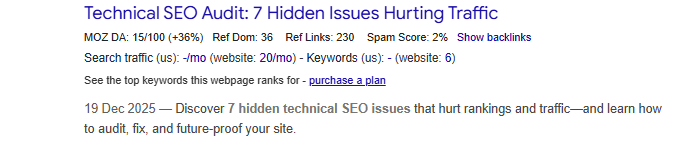
Search engines don’t use meta descriptions to rank pages, but users (and AI systems) still read them. That makes them critical.
A good meta description increases clicks by giving users a reason to choose your page. It also shows up as a snippet in SERPs and AI Overviews when the system finds it more useful than on-page content.
Here’s how to write them effectively:
- Keep it under 155 characters to avoid truncation.
- For Mobile keep meta descriptions about 120 characters. Keep them concise
- Include the target keyword to match the query and trigger bold text.
- Summarize the main value of the page in plain language.
- Avoid duplication across pages. Each meta should be unique.
- Use active voice to speak directly to the searcher.
- Use call to action to make it more clickable
Example:
Learn how to optimize your content for search and AI in 2026 with clear steps, tools, and real examples.
AI systems like ChatGPT and Perplexity use title + description + URL as one of the first signals when selecting sources to cite.
5. URL Structure
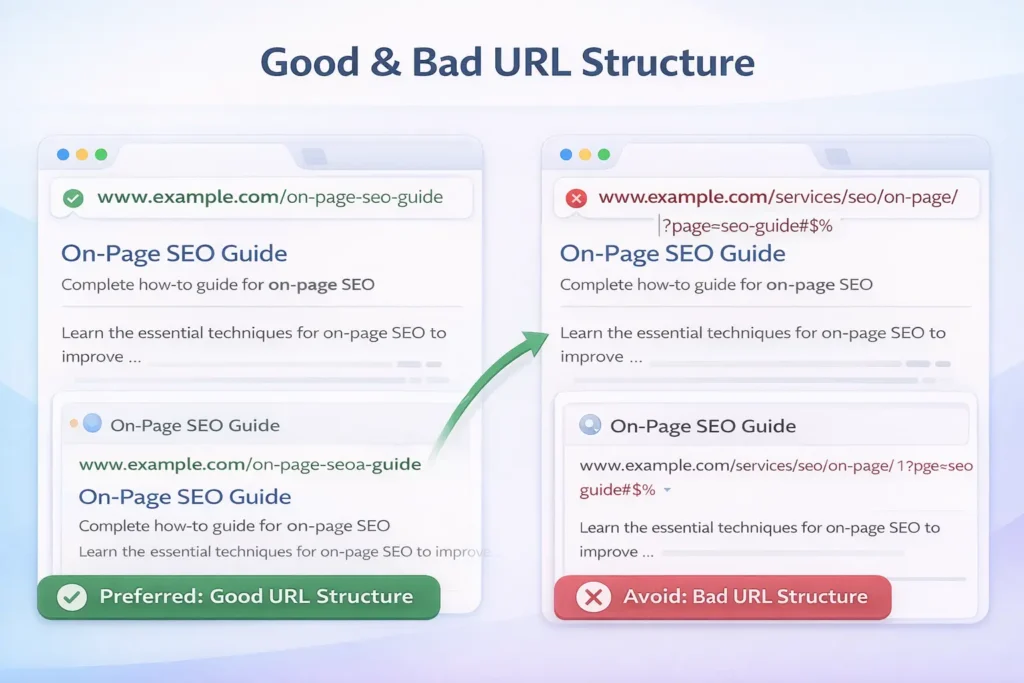
Search engines read URLs to understand a page’s topic. Clean, simple slugs improve both indexing and user trust.
Use keyword-based slugs that clearly reflect the content. Avoid unnecessary words, parameters, or dates that can make your URLs look outdated or confusing.
Good:
/on-page-seo-guide
Bad:
/blog/article.php?id=8471/2023/10/on-page-seo-best-tips
Follow this structure:
- Keep it short and readable
- Include your target keyword
- Avoid stop words (and, of, the…) unless needed for clarity
- Use hyphens, not underscores
- Keep slugs evergreen by skipping dates unless they’re essential (e.g. for event pages)
AI systems like Google’s Search Generative Experience (SGE) and Perplexity scan URLs to identify the topical relevance and freshness of a page. Google also uses URL paths in breadcrumbs within SERPs, helping users understand content hierarchy.
Minimize URL Depth
Google gives more weight to pages closer to the homepage. The deeper the page (e.g. /home/services/seo/on-page-seo/guide), the less authority it may inherit.
Keep important pages as close to the root as possible:
Preferred:
/on-page-seo-guide
Weaker:
/services/seo/on-page/on-page-seo-guide
Pages closer to the homepage get crawled more regularly and are easier for users to reach.
6. Internal Linking
Internal linking connects one page of a website to another page on the same domain. These links help search engines and AI systems understand your site’s structure. They guide users to related content, pass link authority, and reinforce topical clusters.
When you place links strategically between relevant pages, you show how concepts relate. This improves crawlability, supports semantic understanding, and helps important pages rank better.
Hub-and-Spoke Model
This model improves structure. You pick a hub page (like a pillar guide) and connect it to related subpages (spokes) through internal links.
- Hub: “On-Page SEO Guide”
- Spokes: “Title Tag Optimization,” “Structured Data,” “SEO Content Structure”
This model:
- Builds topical relevance around the main topic
- Sends consistent internal signals about which page is most important
- Helps crawlers group related pages and topics
Anchor Text Relevance
Use anchor text that clearly reflects the linked page’s topic.
- Good: “optimize title tags for SEO” → links to a guide on title tag SEO
- Bad: “click here” or generic “read more”
Descriptive anchors help both users and crawlers understand where the link leads. They also support AI systems in connecting related entities and attributes across your site.
7. External Linking
External linking means adding hyperlinks from your page to reputable websites outside your domain. It shows that your content is well-researched and connected to trusted sources.
Search engines and AI systems use external links as credibility signals. When you cite authoritative sites contextually not just for SEO, but to support claims or data, you increase trust, improve user value, and build topical depth.
Best practices:
- Link only to credible high authority sources that reflect expertise or original data. Avoid spammy, low-quality domains. Tools like Ahrefs and Semrush can help verify domain trust.
- Keep external links relevant to the surrounding content
- Use descriptive, natural anchor text that tells users what they’ll see when they click (e.g., Google’s Quality Rater Guidelines, not click here)
- Open external links in a new tab to avoid losing readers
- Add nofollow when needed (e.g., affiliate, sponsored, or untrusted links)
PRO TIP:
4–8 well-placed external links is a healthy range for long-form content. Avoid overlinking or citing weak domains.
8. User’s Page Experience & Core Web Vitals
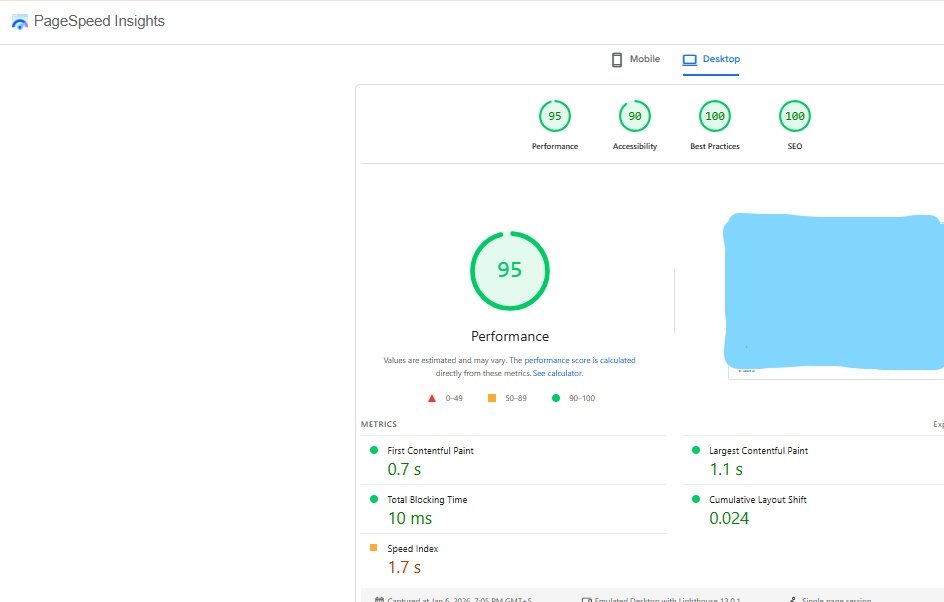
Page Experience is how users feel when interacting with your page and it’s a confirmed ranking signal. Google uses behavioral and performance signals to judge whether your page delivers a smooth, helpful experience.
Modern page experience includes:
Core Web Vitals (CWV)
- LCP (Largest Contentful Paint): measures loading performance
- FID (First Input Delay): measures interactivity
- CLS (Cumulative Layout Shift): measures visual stability
You can analyze it with page speed insight, a tool by Google.
Mobile-Friendliness
Most searches are mobile. A responsive, touch-friendly design is essential for both rankings and user satisfaction.
Secure Connections (HTTPS)
Google prioritizes secure sites. Always serve content over HTTPS.
Avoid Annoying Pop-ups That Block Content
Avoid aggressive pop-ups that block content or frustrate users, these hurt both UX and rankings.
Fast load times
Speed impacts bounce rates, rankings, and AI citations. Compress images, use caching, and eliminate unnecessary scripts.
Real User Metrics & Engagement Signals Matters
Search engines measure how users interact with the page. Google tracks engagement signals like time on page, scroll depth, and click behavior to evaluate content quality.
These are known as behavioral signals, and they act like indirect ranking factors. If users bounce quickly, search systems may downgrade your page’s relevance. If they stay, scroll, and click through, your content is doing its job.
Optimize for these signals:
- Use clear subheadings for fast scanning
- Add table of contents for easier navigation
- Hook users early with direct value
- Use media, callouts, and formatting to hold attention
These improvements reduce bounce rate, increase dwell time, and support passage indexing by making sections more accessible.
9. Structured Data & Schema Markup
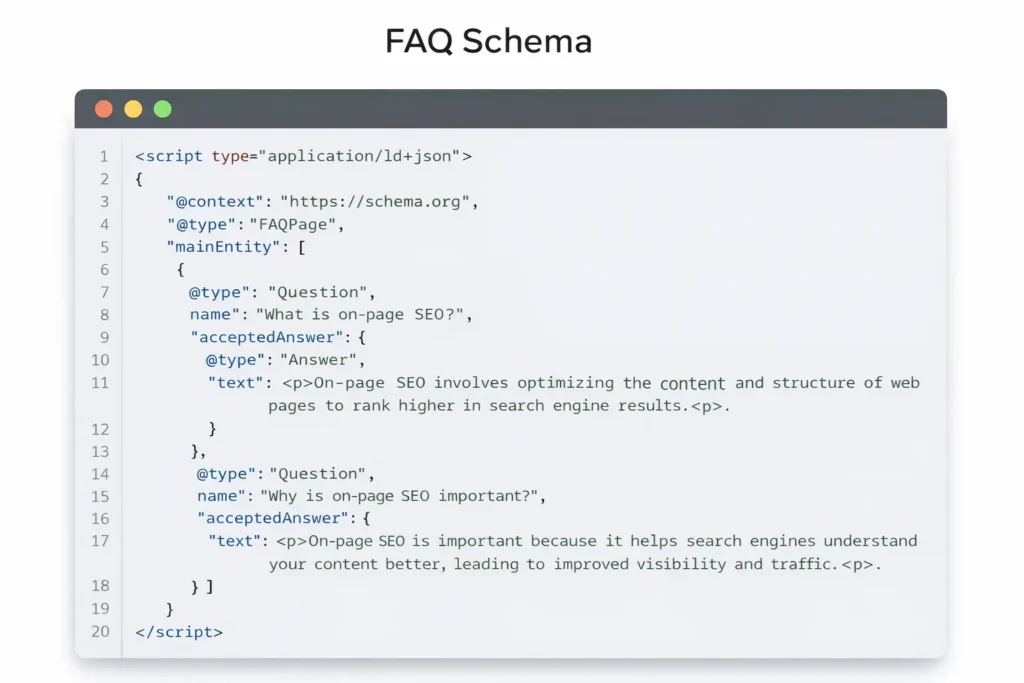
Search engines and AI systems don’t “see” pages the way humans do instead they process data. Schema markup helps translate your content into structured data that systems like Google Search, ChatGPT, and Gemini can interpret easily.
It’s a backend layer of code that labels each part of your page: what’s a product, what’s a review, what’s a recipe, what’s an author bio and what questions are answered. This improves how your page appears in search and how it gets reused in AI-generated summaries.
Focus on schemas that support your topic type:
- Article for blog posts and editorial content
- FAQPage for Q&A sections
- HowTo for tutorials or step-based guides
- BreadcrumbList for page navigation clarity
- Author and Organization for E-E-A-T support
Google’s official guide on structured data - Local business schema if you are based in particular city.
Create schema and verify it in Google rich results for validity. Well-implemented schema improves how your content appears in search and increases the chances of being featured in AI-generated results.
10. Image & Media Optimization
Search engines and AI systems scan images as content. They evaluate filenames, alt text, size, and context to interpret meaning and relevance.
Follow these optimization steps:
- Write clear alt text (under 125 characters). Describe what the image shows using natural, concise language and keyword.
- Use short, descriptive filenames. Name images based on content (e.g., internal-link-structure.webp).
- Compress images. Reduce file size to boost load speed and meet Core Web Vitals.
- Use unique, relevant visuals. Avoid stock images. Use original graphics to stand out in SERP and AI results.
- Format for responsiveness. Choose scalable formats like WebP or SVG for faster load times on all devices.
- Provide context. Use captions or nearby text to reinforce the image’s role in the content.
Optimized images improve search visibility, increase user engagement, and help AI systems like Gemini and Perplexity understand your topic better.
11. E-E-A-T Implementation (Experience, Expertise, Authoritativeness, Trustworthiness)
Google uses E-E-A-T signals to assess content quality. AI systems do the same to determine credibility when citing sources.
You need to show:
- Experience. Prove you’ve done what you write about. Add original insights, examples, screenshots, or photos.
- Expertise. Include your credentials, background, or author bio. Link to profiles if relevant.
- Authoritativeness. Reference trusted sources. Earn backlinks from niche-relevant sites.
- Trustworthiness. Use HTTPS, display business details, link to privacy and policy pages, and avoid manipulative popups.
Embed these signals throughout the page, not just in the footer or about section.
Example:
- For SEO guides: Mention tools you’ve used, results achieved, and real tactics.
- For product reviews: Show test results, comparisons, or photos of usage.
PRO TIP:
Add the author’s bio, a short credential summary, and supporting links to reinforce credibility.
12. Passage Optimization & Section Signals
Google and AI models now rank and cite sections not just full pages. Each block of content should work as a standalone answer.
To optimize for this:
- Use clear, descriptive subheadings. H2s and H3s should define the section’s topic precisely.
- Write skimmable content. Use short paragraphs, bulleted lists, and bolded highlights to increase readability.
- Start with the main point. Give the core answer or idea in the first 1–2 lines of the section.
- Support it with value. Add examples, stats, or clear explanations that reinforce the answer.
Passage-based ranking lets your content earn visibility even when the full page doesn’t rank high. Systems like Google’s Passage Indexing and Perplexity’s citation engine look for self-contained sections that match user queries closely.
Example:
If your H3 is “Title Tag Best Practices,” the paragraph should immediately define what a title tag is, then offer specific, actionable tips.
Continuous Monitoring & Updates
Content that ranks today might drop tomorrow especially with AI systems pulling fresher, more relevant answers.
To stay competitive:
- Track your rankings. Use tools like Ahrefs or SERanking to monitor target keywords and visibility shifts.
- Check AI citations. Use tools like Ahref, AlsoAsked or Brand Radar to see if your content is being cited by AI platforms like ChatGPT, Perplexity, or Google Gemini.
- Update outdated content. Refresh stats, tools, screenshots, or methods to align with current standards.
- Fix decayed pages. Identify posts with declining traffic or engagement and improve their structure or depth.
- Test changes. Adjust title tags, meta descriptions, and internal links then measure impact.
Treat on-page SEO as an ongoing process. Google’s algorithms and AI systems reward content that evolves with user needs and search behavior.
How Modern Crawlers and LLMs Interpret a Webpage
Search engines and AI systems analyze how the page is built. Modern crawlers scan the HTML, parse headings, and identify relationships between content blocks. They look for clarity, structure, and relevance.
Large Language Models (LLMs) like Gemini or ChatGPT don’t rely on keywords alone. They extract meaning from layout, sentence structure, and topical consistency.
They compare sections, pick up on semantic patterns, and rank the usefulness of each block. If your page covers a topic clearly, they treat it as a reliable source even if it doesn’t rank #1.
To help systems interpret your content:
- Use clear H1s and H2s to separate core ideas
- Keep paragraphs short and focused
- Include related entities and questions users ask
- Write in a format that’s easy to cite or extract
If your structure makes sense to a human, it will make sense to a crawler and to AI.
Tools & Analytics for On-Page SEO (2026)
You can’t fix what you don’t measure. These tools track how your pages perform, what breaks rankings, and what earns visibility.
1. Google Search Console
Tracks how your pages rank, what keywords trigger impressions, and how users interact with search snippets. Use it to measure impact after on-page changes.
Check: impressions, CTR, page indexing, crawl issues.
2. Ahrefs
Audit title tags, meta descriptions, internal links, and keyword rankings. Use it to find gaps, check AI citations, and fix site structure.
Check: top pages, ranking drops, content issues, link flow.
3. PageSpeed Insights
Measures speed and Core Web Vitals. Use it to catch performance issues that hurt UX and rankings.
Check: LCP, CLS, INP, mobile vs desktop speed.
4. Screaming Frog
Crawls your entire site for broken links, missing metadata, header issues, and page depth.
- Check: duplicate titles, 404s, redirect chains, thin content.
5. Surfer SEO
Compares your content with top competitors. Shows missing keywords, semantic terms, and structural weaknesses.
Check: content score, heading hierarchy, entity coverage.
6. Hotjar or Clarity
Heatmaps and recordings show where users scroll, click, or drop off. Use it to improve content flow and engagement.
Check: scroll depth, rage clicks, exit points.
7. Schema Validator (Google / Merkle)
Tests your schema markup for errors. Use it to confirm FAQ, HowTo, and Article schema is implemented correctly.
Check: schema validity, snippet eligibility.
8. Google Analytics 4 (GA4)
Tracks user behavior after clicks: bounce rate, engagement time, scrolls, conversions.
Use it to measure whether your optimized content holds attention and drives actions.
Check: engagement rate, session duration, goal completions, behavior by page.
Real Results: On-Page SEO Turned This Site Around
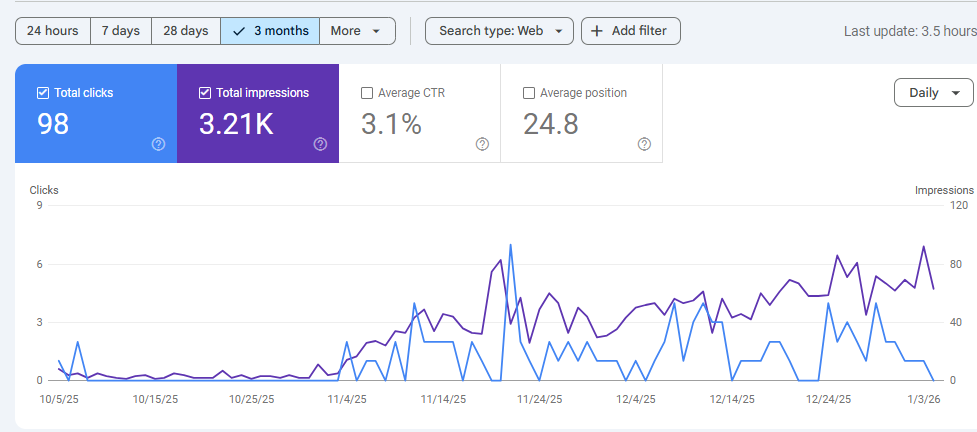
When our marketing agency took over this site in early November 2025, it was almost invisible in search, barely any impressions, few clicks, and no real visibility.
We didn’t touch backlinks. We didn’t run ads. We only focused 100% on on-page SEO including structure, headings, titles, internal links, and clarity.
The result?
In just 60 days:
- Impressions jumped from nearly 0 to 3,210+
- Clicks grew to 98, organically
- CTR improved to 3.1%
- Average position reached 24.8 across keywords
This growth came from semantic optimization, not keyword stuffing. We structured the site for both search engines and AI systems, and the results show consistent visibility, increasing clicks, and no fluff.
On-Page SEO Is Now Semantic Architecture
Search engines and AI no longer rank pages based on keywords alone.They rank pages that present meaning clearly, logically, and comprehensively.
You must structure your content the way a system and a human would learn it. You must optimize for being understood, not just for being found. When your page communicates topic, intent, and value explicitly, systems reward it with visibility, AI citations, and stable rankings. Semantic clarity beats simple formatting every time.
Still Not Ranking — Even After “Optimizing”?
On‑page SEO is the practice of optimizing the content, structure, and metadata of a single webpage so search engines and AI models can clearly understand its topic and intent.
Optimize by targeting the right keywords, covering full query paths, structuring content semantically, using clear headings, and applying proper markup and UX signals.
The most important factors are content clarity, heading hierarchy, entity and attribute coverage, title and meta optimization, internal links, schema markup, and page experience signals.
Yes. On‑page SEO still matters because search engines and AI systems rely on clear topical signals to match queries with the best answers. It improves relevance, visibility, and AI citation potential.
Aim for a few (about 3–8) relevant, high‑authority external links that support your claims and improve credibility. Use descriptive anchor te
Yes. Page speed, mobile usability, layout stability, and readability all influence how users interact with your content and how systems evaluate its quality.
Entity saturation means covering a topic’s main subject (entity) and its key traits (attributes) so search engines and AI systems clearly understand the semantic scope of your page.

Ermus is an SEO specialist and content writer with 2 years of experience in driving website growth through effective search strategies and engaging content. Specializing in local SEO, on-page/off-page optimization, and semantic content, she applies Koray Tuğberk GÜBÜR’s holistic SEO methods to build authority and relevance across topics. Ermus stays ahead of the curve, constantly refining strategies to adapt to evolving search trends.