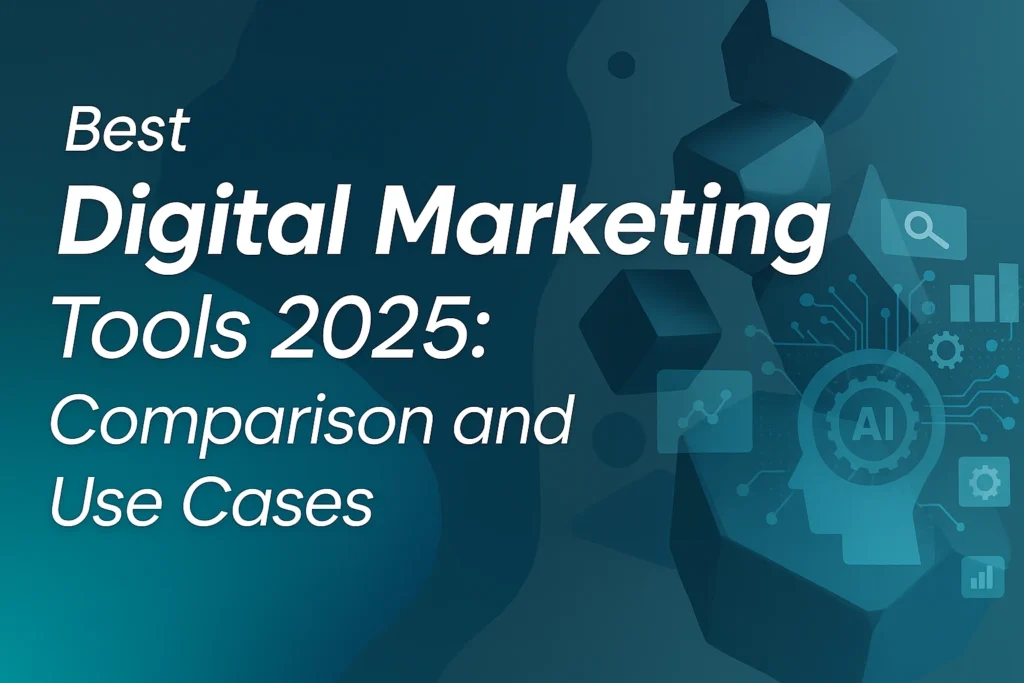
Digital marketing teams rely on tools to plan campaigns, create content, manage channels, measure performance, and automate workflows. These tools help teams understand their audiences and improve targeting with real data. The digital landscape continues to evolve in 2025. Artificial intelligence, automation, and privacy-focused analytics shape most modern strategies. Marketers need tools that support speed, accuracy, and productivity.
HubSpot reports that more than ninety percent of marketers use artificial intelligence to support research, content creation, and performance insights in 2025. This trend shows how digital marketing has shifted from manual execution to software-driven precision. Teams now use tools to guide strategy, analyze attribution, and optimize every stage of a campaign.
This guide explains the best digital marketing tools for 2025. It compares their features, strengths, and ideal use cases. It also shows how real brands apply these tools to solve real problems. You can use this guide to build a tool stack that matches your goals and your workflow.
If you want to explore the core digital channels before reviewing tools, you can read Types of Digital Marketing. This resource gives you a clear overview of the channels that these tools support.
Understanding Digital Marketing Tools in 2025
Digital marketing tools help teams create, manage, and optimize campaigns. The right tools increase efficiency, accuracy, and output quality.
Why Tools Matter in Modern Digital Marketing
Teams move faster
Automation reduces manual work such as scheduling, reporting, and data entry.
Teams reduce errors
Accurate measurement provides dependable insights for decision-making.
Teams improve performance
Analytics tools show what works and what does not, helping refine future campaigns.
Teams scale easily
Integrated software supports multiple channels from one workspace.
Salesforce reports that high-performing marketers use automation twenty times more often than low performers, showing how digital tools drive measurable improvements.
How to Choose the Right Digital Marketing Tools
Selecting tools depends on clear goals, workflows, and budget. The following framework helps marketers evaluate effectively.
1. Define your goal
Decide what you want to improve: visibility, engagement, conversions, or retention.
2. Understand your workflow
A small founder-led business may prefer simple tools, while larger teams need automation and integration.
3. Check integration
Ensure your chosen tools connect with Google Analytics, Meta Ads, Shopify, or CRM systems.
4. Check learning curve
Choose tools your team can master quickly.
5. Verify accuracy
Trust only tools that provide reliable data to prevent misleading insights.
6. Plan for scalability
Select tools that grow with your business to avoid switching costs later.
McKinsey reports that companies with integrated digital systems increase revenue faster than those with disconnected setups.
Need help choosing the right digital marketing tools?
Core Categories of Digital Marketing Tools in 2025
Each category below explains the purpose, advantages, and real-world use cases of top marketing tools.
1. Search Engine Optimization Tools
SEO tools support keyword research, technical audits, and backlink tracking. These tools strengthen organic visibility and long-term traffic.
SEMrush
SEMrush provides keyword data, competitive intelligence, and technical audits.
Use case: A fitness brand finds keyword gaps for “home workout equipment” and creates content to fill them.
Ahrefs
Ahrefs gives backlink insights and competitor content analysis.
Use case: A travel agency reviews high-ranking competitor pages for “Europe tour packages” and earns backlinks through better guides.
Google Search Console
Google Search Console tracks impressions, clicks, and technical health.
Teams scale campaigns easily
Use case: A business improves page titles and meta descriptions to boost click-through rates.
2. Content Research and Creation Tools
Content tools streamline ideation, writing, optimization, and collaboration.
ChatGPT
ChatGPT assists with content drafts, research summaries, and outlines.
Use case: A marketing team creates multiple blog frameworks quickly and saves hours on planning.
Grammarly
Grammarly enhances clarity, tone, and grammar consistency.
Use case: Editors refine brand voice and maintain professional tone across blogs.
Notion
Notion helps teams organize editorial calendars, approval flows, and notes.
Use case: Agencies coordinate content planning and approvals without email clutter.
Surfer SEO and Clearscope
These platforms analyze search intent and NLP signals.
Use case: A SaaS company improves topic depth and keyword balance for better SEO results.
3. Social Media Management Tools
Social tools simplify posting, scheduling, and engagement analysis across multiple platforms.
Buffer
Buffer schedules and analyzes posts on Instagram, Facebook, LinkedIn, and X.
Use case: A skincare brand maintains consistency by automating daily posts.
Later
Later supports visual planning and analytics for image-based brands.
Use case: A fashion boutique previews its Instagram grid before campaigns launch.
Metricool
Metricool measures engagement and competitor performance.
Use case: A local café adjusts post timing after comparing competitor activity.
Hootsuite reports that short-form videos generate the highest engagement in 2025.
4. Email Marketing and Automation Tools
Email marketing remains one of the most profitable digital channels. Litmus reports that businesses earn thirty-six dollars for every dollar spent.
Mailchimp
Mailchimp supports newsletters and automated campaigns.
Use case: A coaching business creates a welcome email sequence for new subscribers.
Klaviyo
Klaviyo integrates with Shopify and provides behavior-based automation.
Use case: An online store sends restock alerts and personalized offers.
ConvertKit
ConvertKit caters to creators and educators.
Use case: Course creators build segmented lists that nurture leads until enrollment.
5. Advertising and PPC Tools
Paid advertising captures demand quickly. PPC tools help brands target and convert active buyers.
Google Ads
Google Ads drives targeted traffic through keyword bidding.
Use case: An education platform promotes online courses to users searching “learn data analytics.”
Meta Ads Manager
Meta Ads Manager offers precise targeting on Facebook and Instagram.
Use case: A salon runs city-specific campaigns to attract bridal clients.
Microsoft Ads
Microsoft Ads provides lower cost-per-click in desktop-heavy markets.
Use case: A B2B software company uses Microsoft Ads to reach corporate decision-makers.
Statista projects strong growth in global digital ad spend through 2025, led by search and social advertising.
6. Analytics and Reporting Tools6. Analytics and Reporting Tools
Analytics platforms measure performance, identify issues, and guide optimization.
Google Analytics 4
Google Analytics 4 uses an event-based tracking model.
Use case: A brand measures user engagement through scroll depth and video completions.
Looker Studio
Looker Studio builds dashboards using GA4, Meta Ads, and CRM data.
Use case: Agencies deliver real-time visual reports to clients.
Hotjar
Hotjar records user behavior and heatmaps.
Use case: An ecommerce store identifies checkout friction points and raises conversion rates.
7. Artificial Intelligence Tools in 2025
AI improves creative generation, automation, and personalization. McKinsey notes that AI-driven marketers shorten campaign turnaround times by nearly thirty percent.
Jasper AI
Jasper supports copywriting for ads, social posts, and product descriptions.
HubSpot AI
HubSpot AI automates CRM processes, lead scoring, and personalized recommendations.
Surfer AI
Surfer AI accelerates content optimization through real-time keyword data.
Comparison Table: Best Tools 2025
| Category | Tool | Strength | Best Use Case |
|---|---|---|---|
| SEO | SEMrush | Keyword research and audits | SEO strategy |
| SEO | Ahrefs | Backlink analysis | Link building |
| Social | Buffer | Scheduling and analytics | Consistent posting |
| Klaviyo | Ecommerce automation | Shopify stores | |
| Analytics | GA4 | Event tracking | Performance analysis |
| AI | HubSpot AI | Predictive insights | CRM automation |
| Content | Jasper | Copywriting speed | Content production |
Practical Business Use Cases
Ecommerce Brand Increases Repeat Revenue
The brand uses Klaviyo and GA4 to segment customers and track repeat orders. Targeted emails lift repeat revenue by twenty percent.
Local Service Business Boosts Engagement
A salon uses Later and Metricool to schedule content at optimal times and increase appointment bookings.
Software Company Strengthens SEO
A software firm applies SEMrush and Surfer AI to expand topic clusters, improving visibility for high-intent keywords.
Conclusion
The best digital marketing tools in 2025 help teams improve clarity, automation, and decision-making. They enable marketers to analyze data, personalize campaigns, and grow efficiently. Building the right stack creates faster workflows and better results. Choose tools that match your goals and stay updated with emerging technologies to maintain a competitive edge.
If you need help selecting or integrating digital marketing tools, you can schedule a strategy consultation with InsightCrafts Marketing.
Ready to build your winning digital marketing stack?
What tools should beginners use?
What are the best AI tools for marketers in 2025?
Which tools deliver the best ROI?
How can I select the right tools for my business?

Irum doesn’t just write..she builds stories that cut through the noise. Her words carry clarity, edge, and intention, crafted for readers who expect more than the ordinary.